ASIC Fleet Dashboards That Protect Mining Revenue
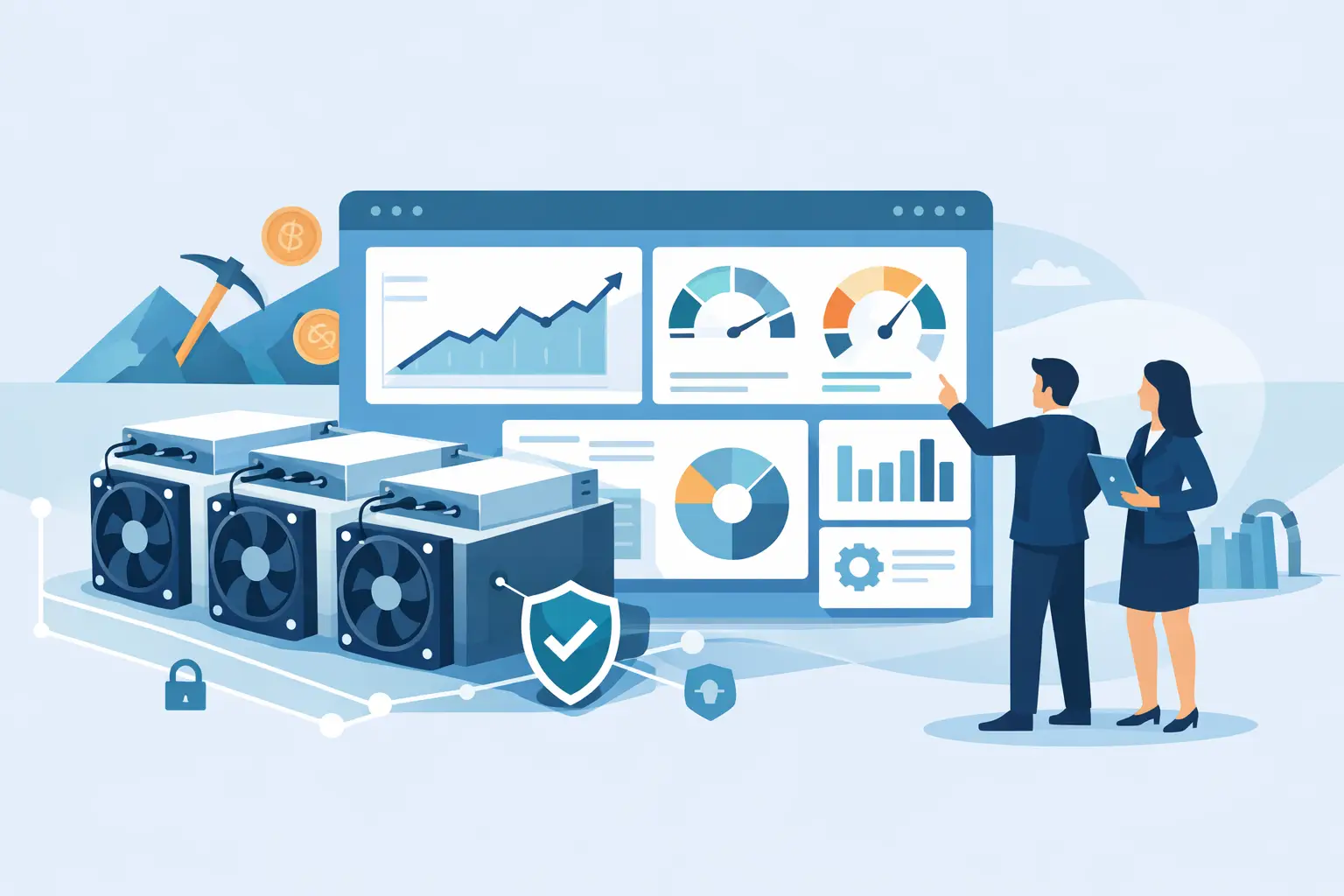
A mining farm can look healthy from a distance while losing meaningful Bitcoin every hour. A few underperforming machines, a rising rejection rate, or a cooling issue in one rack may not stop production outright. They quietly reduce it. ASIC fleet dashboards turn those hidden losses into operating signals that can be reviewed, prioritized, and acted on before they become a monthly revenue problem.
For a single miner at home, checking a pool page and machine interface may be enough. For a hosted fleet, a commercial site, or several facilities, that approach breaks down quickly. Operators need one trusted view of what is hashing, what is consuming power, what requires intervention, and what is actually reaching the pool.
What an ASIC fleet dashboard should show
A dashboard is not simply a screen full of hashrate numbers. Its purpose is to connect machine-level telemetry with the operating decisions that protect production. The best systems let an owner answer practical questions in seconds: How much hashrate is online? Which miners are below target? Is the problem localized to a rack, a network segment, firmware version, or a model of ASIC? What revenue is affected if nothing changes today?
The foundation is real-time and historical hashrate. Live hashrate shows whether a machine is currently contributing to the pool. Reported or average hashrate puts that number in context over hours and days. Both matter. A miner that intermittently drops offline may appear normal in a single snapshot but still deliver poor daily output.
Power data is equally essential. Hashrate without energy consumption does not show operating efficiency. A fleet dashboard should track wattage, joules per terahash, and power behavior by machine, group, and site. This helps operators spot units that are producing less while consuming the same amount of electricity, which can indicate aging hardware, poor tuning, temperature pressure, or a developing component failure.
Temperature and fan telemetry deserve the same attention. In the UAE and other high-heat regions, industrial cooling design is part of the mining business, not an afterthought. A dashboard should surface inlet temperatures, chip temperatures, fan speed, and thermal alarms in a format that makes patterns visible. If a row begins running warmer than neighboring rows, an operator can investigate airflow or filtration before multiple miners start throttling or shutting down.
Pool data completes the picture. It should include accepted hashrate, rejected shares, stale shares, worker status, and payout information. A machine can be powered on and visible on a local network while contributing less accepted work than expected. Comparing ASIC telemetry with pool-side data prevents false confidence.
The metrics that deserve daily attention
Not every metric needs the same level of attention. A serious dashboard reduces noise by making exceptions obvious. Fleet owners should review total online hashrate against the expected baseline, then look at the gap between expected and actual performance. That gap is often more useful than a raw headline number.
Uptime is another critical measure, but it needs a clear definition. A 99% uptime figure can be meaningful only when it distinguishes planned maintenance, curtailment, pool-side issues, and unplanned miner downtime. For an owner, the question is not whether an individual unit ever restarted. It is whether the facility has maintained predictable productive capacity over time.
The following operating indicators are worth tracking together because each tells a different part of the story:
- Online, offline, and degraded miner counts
- Actual versus expected hashrate by fleet, model, rack, and location
- Power draw and efficiency, including deviations from expected watts per terahash
- ASIC temperatures, fan behavior, and cooling-related warnings
- Accepted, rejected, and stale share rates at the pool
- Alert age, repair status, and estimated revenue exposure
The final item is often overlooked. An alert without ownership is only a notification. A useful dashboard records whether a ticket was created, who is handling it, what action was taken, and whether the machine returned to normal output. This closes the loop between monitoring and operations.
Why hashrate alone can mislead
A fleet may be near its target hashrate while still carrying avoidable losses. One group of miners could be running inefficiently, another may have a high reject rate, and a third could be cycling on and off. Looking only at the total can hide all three.
That is why machine grouping matters. Owners should be able to filter a dashboard by ASIC model, firmware profile, rack, customer account, pool, or facility. A pattern that is invisible across 500 machines can become obvious when viewed across 20 miners using the same configuration.
From alerts to a repair decision
The value of monitoring is determined by what happens after an alert. If every warning creates an urgent call, operators become desensitized and important faults get missed. If thresholds are too loose, a small issue becomes a costly outage. The right approach is to assign alerts based on operational impact.
A temporary hashrate dip after a scheduled restart may only need observation. A miner that repeatedly fails to return online should create a service action. A rising temperature trend across a rack should be treated as a site-level investigation, even if no individual machine has stopped hashing yet. Share rejection above the normal range may point to network latency, pool configuration, or firmware settings rather than failed hardware.
This is where historical views are valuable. A dashboard should show when an issue began, whether it is recurring, and what changed around that time. Did ambient temperature rise? Was a firmware update deployed? Did a pool endpoint change? Did the machine begin drawing more power before its hashrate dropped? Operational history turns troubleshooting from guesswork into evidence-based maintenance.
For hosted ASIC owners, the workflow should be transparent. The owner needs visibility into the status of the fleet, while the facility team needs the tools to isolate faults, configure miners, and route units through repair when required. MinersME combines fleet monitoring with data-center operations and in-house repair capability, which helps shorten the distance between detection and corrective work.
Build a dashboard around decisions, not decoration
A crowded interface can make an operation harder to run. Good dashboard design starts with the decisions the user must make at each level.
An owner-level view should lead with online hashrate, daily production, payout status, uptime, and exceptions requiring attention. It should make it clear whether the fleet is performing against its expected output and whether any event affects earnings.
A site manager needs a more operational view. Rack and container status, thermal conditions, electrical load, network health, firmware versions, and open maintenance tickets become more relevant. At this level, drill-down capability matters more than simplified presentation.
A technician needs the deepest view: individual hashboard performance, chip errors, fan telemetry, logs, configuration state, and prior repair history. Giving every user the technician view is not transparency. It is unnecessary complexity. Role-based access keeps information useful while protecting settings that could disrupt production.
The same principle applies to mobile access. A phone view is valuable for checking fleet status, acknowledging a clear alert, or confirming a payout. It is not always the right environment for bulk firmware changes or detailed diagnostics. Control should match the risk of the action.
Transparency needs a financial layer
For many miners, the dashboard is also an accounting tool. The operational view should connect to the commercial reality of mining: production, fees, power charges, and BTC settlement. This is particularly important in hosted environments, where customers need to understand what is included and how performance translates into payouts.
A clear financial layer does not promise a fixed mining result. Bitcoin price, network difficulty, pool luck, transaction fees, and uptime all influence earnings. It does provide traceability. Owners should be able to reconcile reported hashrate with pool performance and their daily BTC settlement, then identify whether a performance variance came from the fleet, the pool, scheduled maintenance, or broader network conditions.
Energy reporting matters here as well. Electricity is usually the largest controllable operating cost in ASIC mining. A dashboard that shows consumption but not the pricing basis gives an incomplete picture. For operators using a downside-conscious energy structure, such as a price-protected cap during weaker Bitcoin markets, the reporting should make the applicable rate and consumption easy to verify.
Questions to ask before choosing fleet software
Before relying on any ASIC fleet management platform, ask whether its data is timely, whether it can support your mix of miners and firmware, and whether it preserves useful history. A platform that only reports current status may help with basic visibility but will not support root-cause analysis.
Also ask how it handles security and permissions. Mining infrastructure controls valuable equipment and Bitcoin-producing capacity. Account roles, audit trails, secure configuration access, and clear ownership of data are operational requirements, not optional features.
Finally, consider the handoff from software to physical action. Independent farms may need their own technicians and spare-parts process. Hosted customers need confidence that alerts lead to monitored interventions, repair decisions, and documented recovery. The dashboard should fit the operating model, not force the operation to work around the software.
The best dashboard does not create more screens to watch. It gives every miner, operator, and technician a clearer next action. When performance, power, cooling, pool data, and maintenance status are visible in one disciplined operating view, protecting mining revenue becomes a repeatable process rather than a daily scramble.